

The role of primitive reflexes in breastfeeding

Your baby’s breastfeeding story begins long before their first latch
In fact, they’re rehearsing for their breastfeeding debut right now in your womb. Isn’t it amazing? While you’re reading this, your little one is already practicing the skills they’ll need for successful breastfeeding after birth.
Think of it as nature’s own preparation course. Just like you’re getting ready for your baby’s arrival by setting up the nursery and learning about parenthood, your baby is busy developing their own essential skills. They’re practicing sucking, swallowing, making all kinds of reflexive movements, discovering their hands, and even getting familiar with the flavors they’ll experience in your milk – all before taking their first breath!
As an IBCLC, I love sharing this fascinating journey with expecting parents. Understanding how your baby prepares for breastfeeding can boost your confidence and help you learn to trust your baby and the process. Here’s something that might blow your mind: your baby uses over 20 primitive reflexes to breastfeed successfully. TWENTY! That’s like a perfectly choreographed dance that nature has been rehearsing for millions of years.
Ready to discover the remarkable ways your little one is getting ready for their big day? Let’s explore this amazing prenatal journey together. I’ll break down exactly what’s happening in each trimester, explain how these fascinating reflexes work together, and show you why your baby is already more prepared than you might think.
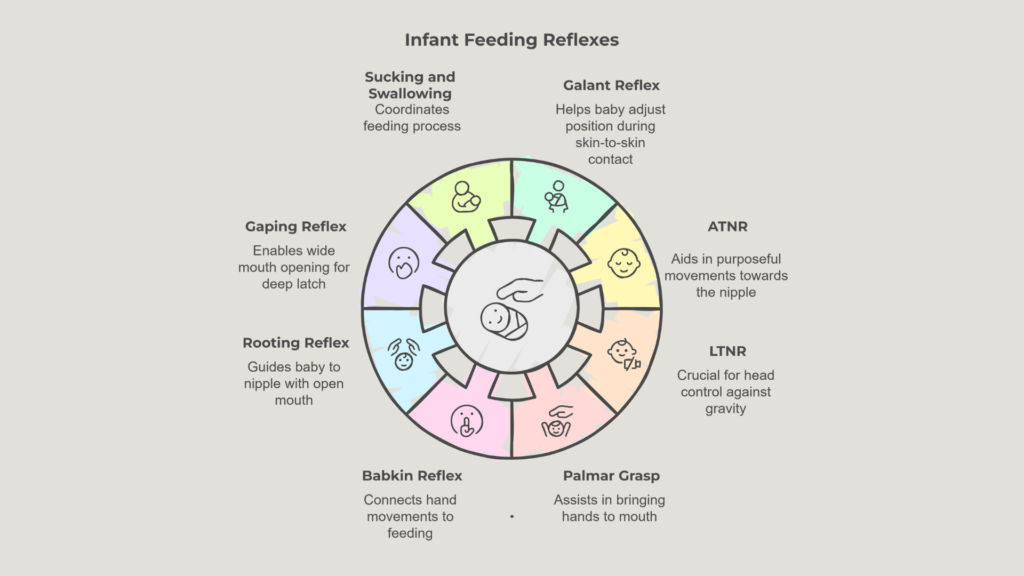
Infant Feeding is a reflexive behavior
The Amazing Journey Begins: First Trimester (0-3 months)
Ever wonder what your tiny one is up to during those first few months? While you might be focused on morning sickness and food aversions (hello, crackers for breakfast!), your baby is already laying the groundwork for their breastfeeding journey.
Early Building Blocks
Around 9 weeks – when your baby is only the size of a grape – something remarkable happens. The Babkin reflex emerges, which might sound like a fancy medical term, but it’s actually pretty cool. When pressure is applied to your baby’s palms, their mouth starts to open. Think of it as your baby’s first “dress rehearsal” for breastfeeding. This same reflex will later help them coordinate hand movements with feeding, which is why babies often like to keep their hands near their face while nursing.
Key Developments at 12 Weeks
By week 12, two more crucial reflexes join the party:
The Palmar Reflex Your baby starts to develop their grasping reflex. While it might seem unrelated to feeding, this reflex is actually super important! It will help your baby find and hold their hands near their face during feeding, supporting their natural feeding position. Here’s a pro tip: when your newborn is trying to latch, resist the urge to pull their hands away from their face or put mittens on them. Those little hands are actually helping guide them to the breast! If you move their hands, their mouth will likely follow. Trust those tiny hands to do their job; they’ve been practicing for months!
The Tonic Labyrinthine Reflex (TLR) This reflex might sound complicated, but think of it as your baby’s internal GPS system. It helps them start figuring out which way is up and down – pretty important when you’re floating in space! The “forward” phase begins now, helping your baby develop the head control they’ll need for feeding after birth.
The First Sips
Around this time, your baby also starts their first “practice feeds” by swallowing small amounts of amniotic fluid. It’s like nature’s way of letting them test drive the equipment! This swallowing helps develop the muscles they’ll use for feeding later on.
Fun Fact: By the end of the first trimester, your baby’s facial muscles are developed enough that they can already make sucking movements. Talk about being ahead of the game!
Practice Makes Perfect: Second Trimester (3-6 months)
Welcome to the second trimester – this is where things get really exciting! Your baby is growing bigger, stronger, and adding some major skills to their breastfeeding toolkit. Think of this as their “intensive training period.”
The Big Three: Essential Feeding Reflexes
The Rooting Reflex This is your baby’s built-in GPS for finding the breast. When something touches your baby’s cheek or the corner of their mouth, they’ll automatically turn toward that side and open their mouth. Nature’s pretty smart, right? Your baby is practicing this movement right now by responding to touches from the uterine wall. After birth, this reflex will help them locate your nipple like a little feeding expert.
The Spinal Galant Reflex Here’s something fascinating – when your baby feels a touch along their lower back, they naturally curve their body toward that side. This reflex might seem random, but it’s actually crucial for the breast crawl after birth. It helps your baby wiggle and move their way to the breast during their first feed. Pretty amazing how nature thinks of everything!
The Bauer Crawling Reflex Speaking of the breast crawl, the Bauer reflex is your baby’s built-in “crawling coach.” When pressure is applied to the soles of their feet (imagine them pressing against your uterine wall), they make stepping movements. After birth, this reflex helps them literally crawl up your belly to find the breast – yes, babies can do that!
Sucking Gets Serious
By now, your baby is actively practicing their sucking skills. They’re not just randomly moving their mouth anymore – they’re coordinating complex patterns of sucking and swallowing amniotic fluid. Think of it as their pre-birth feeding practice sessions. And bonus: all this swallowing helps develop their digestive system too!
Pro Tip: During your pregnancy, you might notice your baby is more active at certain times of the day. These patterns often continue after birth, which can help you anticipate when they might want to feed. Your baby is already communicating with you!
Getting Ready for the Big Day: Third Trimester (6-9 months)
The home stretch! By now, your baby has been practicing their feeding skills for months, and they’re putting all the pieces together. It’s like they’re in their final dress rehearsal before opening night!
Reflex Integration: The Grand Finale
Remember all those reflexes we talked about earlier? They’re still hard at work, but now they’re becoming more coordinated. Your baby is practicing how to use them all together – kind of like a conductor bringing all the instruments together for a symphony.
Fine-Tuning the Senses
Your baby is becoming increasingly sensitive to the world around them, even from inside the womb:
- They’re getting familiar with your voice, which will help them find their way to the breast after birth (they’ll naturally turn toward your voice!)
- Their sense of smell is developing, preparing them to recognize the unique scent of your milk
- They’re tasting the amniotic fluid, which carries flavors from your diet – giving them a preview of what your milk will taste like
The Final Preparations
By now, your baby has all the tools they need for successful breastfeeding:
- Fully developed sucking and swallowing coordination
- A complete set of feeding reflexes ready for action
- Strong oral muscles from months of practice
- Sensory awareness that will help them find and latch onto the breast
Important Note: Nature has spent nine months preparing your baby for this moment. When you hear people say “babies are born to breastfeed,” this is exactly what they mean! Your little one already knows what to do – they’ve been practicing for months!
How It All Works Together: Nature’s Perfect Choreography
Think of your baby’s feeding reflexes as a beautifully choreographed dance – each movement flows naturally into the next. Let’s break down how this amazing sequence works, from birth to that first magical latch!
The Birth to Breast Journey
Step 1: The Power of Skin-to-Skin When your baby is placed on your chest right after birth (assuming all is well), something remarkable happens. All those reflexes they’ve been practicing spring into action! The pressure on their feet (remember that Bauer reflex?) combined with their natural instincts starts their journey to the breast.
Step 2: The Breast Crawl Here’s where it gets REALLY cool. Your baby will actually start to wiggle and scoot toward your breast using:
- The Spinal Galant reflex helping them curve and move their body
- The Bauer crawling reflex pushing with their feet
- The TLR helping them lift and turn their head
- Their developing sense of smell guiding them toward your nipple
Step 3: Finding the Sweet Spot As your baby gets closer to the breast:
- The rooting reflex helps them turn toward the nipple when they feel touch on their cheek
- The Babkin reflex coordinates their hand and mouth movements
- Their palmar reflex keeps their hands in the perfect position to support their feeding
The Perfect Latch Sequence
Once your baby reaches the breast, here’s how all these reflexes work together:
- Rooting helps them find and approach the nipple
- The Landau reflex maintains their ideal position
- When baby’s chin touches the breast, they’ll instinctively gape (open their mouth wide) and tilt their head back – this is the gaping reflex in action! This reflex is crucial because it helps baby get a deep latch with their chin buried in the breast and nose free to breathe
- Their sucking reflex coordinates with swallowing and breathing in a perfect rhythm
Pro Tips for Supporting These Natural Reflexes:
- Keep baby skin-to-skin as much as possible in the early hours
- Avoid pulling baby’s hands away from their face
- Let baby lead the journey to the breast when possible
- Trust that your baby knows the choreography – they’ve been practicing for months!
When Things Need a Little Help
Sometimes babies need extra support getting started, and that’s okay! Even if your birth experience doesn’t allow for immediate skin-to-skin, or if your baby needs some help learning to coordinate these reflexes, don’t worry. These instincts remain strong for several months after birth, giving you and your baby time to find your rhythm together.
What This Means for You and Your Baby
Understanding this incredible prenatal preparation can transform how you approach breastfeeding. Let’s talk about what all this means for your breastfeeding journey.
Building Your Confidence
Remember how we talked about your baby practicing for months? Here’s why that matters for you:
- Your baby isn’t starting from scratch at birth – they’re already an experienced “mini-expert”
- When you understand these reflexes, you can work with them instead of against them
- Knowing what to expect helps you recognize normal newborn feeding behaviors
Supporting Your Baby’s Natural Abilities
In the First Hours: Watch this incredible video
- Ask for uninterrupted skin-to-skin time after birth (when possible)
- Allow your baby time to use their natural reflexes to find the breast
- Resist the urge to rush or force the first latch
- Keep those hands free – no mittens or swaddling during feeding attempts
In the Early Days:
Trust that wiggly head movements are often your baby using their rooting reflex
Watch for feeding cues – your baby’s reflexes work best when they’re calm and interested
Position baby so their chin can lead the way to the breast
Give baby time to gape before bringing them to breast
Conclusion
Isn’t it amazing how perfectly designed this whole process is? Your baby isn’t just passively waiting to be born – they’re actively preparing for their breastfeeding journey. Every kick, every swallow, every reflex is part of nature’s comprehensive preparation program.
As you move through your pregnancy, remember that:
- Your baby is developing all the skills they need for successful breastfeeding
- These innate reflexes will guide them from birth to breast
- Your body and your baby are already working as a team
Understanding this incredible process can help you approach breastfeeding with confidence. When you trust in your baby’s natural abilities and work with their reflexes instead of against them, you’re setting the stage for a smoother breastfeeding journey.
FAQ
Q: How does fetal development prepare babies for breastfeeding? A: Fetal development prepares babies for breastfeeding through a series of carefully timed developmental stages. Starting at 9 weeks, babies develop crucial feeding reflexes, beginning with the Babkin reflex. By 12 weeks, they’re practicing swallowing amniotic fluid, and by the second trimester, they’re developing coordinated sucking movements. This developmental sequence ensures babies are ready to breastfeed at birth.
Q: What are the key stages of feeding development during pregnancy? A: Feeding development follows a clear timeline during pregnancy:
- First Trimester: Development of early reflexes and swallowing abilities
- Second Trimester: Emergence of rooting and sucking reflexes
- Third Trimester: Integration of all feeding reflexes and coordination of suck-swallow-breathe patterns
Q: How does fetal swallowing contribute to breastfeeding success? A: Fetal swallowing, which begins around 12-14 weeks, is crucial for breastfeeding development. By swallowing amniotic fluid, babies:
- Strengthen oral muscles needed for feeding
- Practice coordinating swallowing movements
- Develop taste preferences that carry over to breastfeeding
- Prepare their digestive system for milk
Q: Can complications during pregnancy affect feeding development? A: Most feeding reflexes develop robustly during pregnancy and remain strong even if there are complications. These natural abilities are designed to persist for several months after birth, giving babies and mothers time to establish breastfeeding even if the birth doesn’t go as planned.
Q: What prenatal factors influence breastfeeding development? A: Several factors during fetal development support future breastfeeding:
Natural position preferences that aid in latching
Development of primitive reflexes
Oral muscle strengthening through practice movements
Sensory development (taste and smell)
Hand-to-mouth coordination
Understanding this incredible process can help you approach breastfeeding with confidence. When you trust in your baby’s natural abilities and work with their reflexes instead of against them, you’re setting the stage for a smoother breastfeeding journey.
My Gift to help you prepare: Free Breastfeeding Prep Checklist!
Ready to start preparing for successful breastfeeding? I’ve created a comprehensive Breastfeeding Prep Checklist that will guide you through every aspect of preparation, including:
- Goal Setting and Mindset Mastery
- Essential Breastfeeding Education
- Building Your Support Network
- Creating a Breastfeeding-Friendly Environment
- Understanding Your Baby’s Needs
- Planning for Common Challenges
- Back-to-Work Preparation
- Self-Care Strategies
- And more!
🎁 Download Your Free Breastfeeding Prep Checklist This Google Sheet checklist will help you:
- Track over 50 actionable preparation steps
- Stay organized throughout your pregnancy
- Feel confident and prepared for breastfeeding
- Create a solid foundation for feeding success
Want personalized guidance as you work through the checklist? Register for our FREE monthly Prenatal Breastfeeding Class in Utica, NY or Schedule a prenatal consultation, and we’ll create a customized preparation plan together.
0 Comments